ICRERA 2026

15th International Conference on Renewable Energy Research and Applications

October 12-15, 2026  |  Paris, France

  • 00
    Days
  • 00
    Hours
  • 00
    Minutes
  • 00
    Seconds

Tutorials

Tutorials are held one day before the opening ceremony and are open to all registered participants. Each tutorial is given by an expert in the field and offers both the conceptual background and the practical know-how of its subject. Further tutorials will be announced on this page as they are confirmed.
TUTORIAL 1

How Can We Make Computing Systems Consume Less Energy and Intelligently Adapt Their Workloads to Renewable Energy Availability?

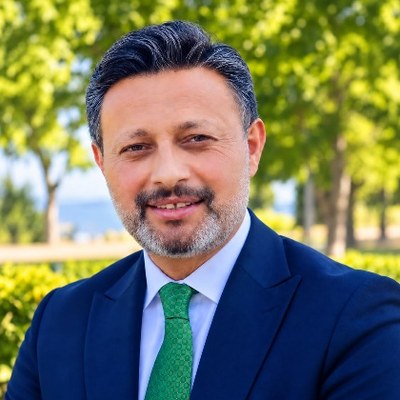
Prof. Dr. Halil Ibrahim BULBUL
Gazi University, Ankara, Türkiye
Abstract

The rapid growth of cloud computing, artificial intelligence, and data-intensive applications has significantly increased the energy consumption of computing infrastructures. Modern servers and data centers require substantial electrical power not only for computation but also for cooling, networking, storage, and supporting infrastructure. Therefore, improving the energy efficiency of computing systems has become an important challenge for both sustainable computing and renewable energy integration.

This tutorial provides a comprehensive introduction to techniques for reducing the energy consumption and environmental impact of computers, servers, and data centers. It covers energy-efficient hardware and software design, dynamic power management, virtualization and containerization, workload consolidation, energy-aware scheduling, and resource optimization.

Special attention will be given to the increasing energy requirements of artificial intelligence workloads, including GPU-based computing, AI model training, and inference. The tutorial will also demonstrate how artificial intelligence itself can be employed to predict workloads and optimize server resource allocation and energy consumption.

Finally, the tutorial introduces renewable-aware and carbon-aware computing, where computational workloads are dynamically scheduled according to renewable energy availability, electricity demand, and carbon intensity. Practical examples and case studies will demonstrate how computing workloads can be shifted in time or location to improve energy efficiency and increase the utilization of renewable energy.

The tutorial aims to provide participants with both conceptual foundations and practical approaches for designing more energy-efficient, intelligent, and sustainable computing infrastructures.

Halil Ibrahim BULBUL is currently working as a Prof. Dr. at the Department of Computer and Instructional Technologies of Gazi Education Faculty, Gazi University. He has been teaching various graduate and undergraduate level computer courses within the department.

He received his Ph.D. degree from Ankara University, Ankara, Turkey and his M.Sc. degree from California University of PA, U.S.A., in 1997 and 1990 respectively, and his B.S. degree from Gazi University, Ankara, Turkey, in 1985.

His research interests include computer networks, computer hardware, educational technologies, e-learning, web based education, distance education, educational software design, database management systems, machine learning, data mining, information security, information security policies and standards, smart grid security, renewable energy systems, occupational standards and the vocational qualifications system.

He has published several books and various indexed articles and conference papers. He has joined and completed various projects at national and international levels supported by government and private sectors.

In addition to serving as an executive for various foundations and associations, and holding positions such as rector's advisor, dean, and department head, he has served on the organizing committees of international conferences such as ICRERA, ICSMARTGRID, ICAIRA, and ICMLA.

He is currently working as the Director of the Distance Education Center of Ahmet Yesevi University, Türkiye.

TUTORIAL 2

DC-DC Converters Based on the Differential Connections

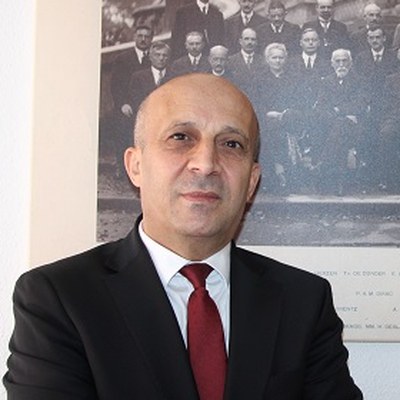
Prof. V. Fernão PIRES
Polytechnic Institute of Setúbal & INESC-ID, Lisbon, Portugal
Abstract

DC–DC converters based on differential connections have attracted increasing interest for applications requiring flexible voltage conversion, improved modularity, and enhanced power-processing capability. In these configurations, two or more converter modules are interconnected through differential input or output connections, enabling voltage and current sharing while allowing the overall system to achieve operating characteristics that are difficult to obtain with a single converter.

This presentation provides an overview of the operating principles, main topological arrangements, and control requirements of differential-connected DC–DC converters. Particular attention is given to voltage conversion ratio, power distribution between modules, semiconductor voltage stress, efficiency, dynamic response, and the influence of parameter mismatches.

A particularly relevant feature of some differential-connected configurations is the possibility of partial power processing. In this operating mode, the converter processes only a fraction of the total load power, typically corresponding to the voltage or power difference between the source and load, while the remaining power is transferred directly through an appropriate connection path. Consequently, the processed power, semiconductor ratings, conduction losses, and converter volume can be reduced compared with conventional full-power-processing architectures.

The challenges associated with balancing currents, maintaining stable operation, and coordinating the switching actions of the interconnected converters are also discussed. Finally, the advantages and limitations of these converters are discussed in terms of efficiency, voltage gain, current sharing, isolation, regulation range, and fault tolerance.

V. Fernão Pires (M’96–SM’09) received the B.S. degree in Electrical Engineering from the Instituto Superior de Engenharia de Lisboa, Portugal, in 1988, and the M.S. and Ph.D. degrees in Electrical and Computer Engineering from the Technical University of Lisbon, Portugal, in 1995 and 2000, respectively.

Since 1991, he has been a member of the teaching staff of the Electrical Engineering Department, Superior Technical School of Setúbal — Polytechnic Institute of Setúbal. He is currently a Professor teaching power electronics and control of power converters. He is also a Researcher with the Instituto de Engenharia de Sistemas e Computadores — Investigação e Desenvolvimento em Lisboa (INESC-ID).

His work has resulted in more than 300 publications. He has been a member of IEEE since 1996 and a Senior Member since 2009, and he currently serves on the IEEE IES Technical Committee on Power Electronics. He is an evaluator of research proposals for several international funding agencies.

He was the General Chair of the international conferences icSmartGrids 2021 and icSmartGrids 2024, and General Co-Chair of IEEE CPE-POWERENG 2020. He was also one of the founders of the IEEE POWERENG conference series. He has been a Program Committee and/or Track Chair member of several international conferences (IECON, ISIE, CPE, ICELIE, POWERENG, ICMLA, INTELEC, ICRERA, ICPEA, PEMC, TENSYMP, BEC, ICEEEP, SMARTGREENS, GreenCom).

TUTORIAL 3

Power System Stability and Control with Increasing Renewable Energy Integration

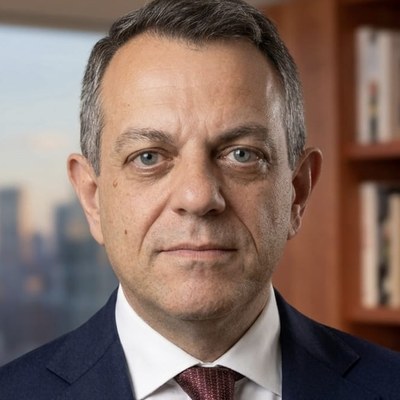
Prof. Dr. Erdal IRMAK
Head of the Smart Grids Graduate Program, Gazi University, Ankara, Türkiye
Abstract

Power systems have evolved over more than a century from relatively small and isolated networks into large, interconnected systems designed around centralized generation and synchronous machines. Their reliable operation has traditionally relied on well-established principles of generation–demand balance, frequency regulation, voltage control, reactive power management, and system stability. However, the growing integration of renewable energy resources and power-electronic-interfaced generation is gradually changing the fundamental characteristics and dynamic behaviour of modern power systems.

This tutorial begins with the historical development, basic structure, operating principles, and key dynamics of conventional power grids, with particular emphasis on frequency and voltage stability and their associated control mechanisms.

It then explores the transition toward renewable-rich power systems and discusses the technical challenges introduced by variable generation, reduced system inertia, changing power flows, and increasing reliance on power electronic converters.

Finally, the tutorial introduces the role of smart grid technologies, advanced monitoring and control, energy storage, and flexible resources in addressing these emerging challenges and supporting the stable, reliable, and sustainable operation of future power systems.

Prof. Dr. Erdal Irmak, IEEE Senior Member, is a Professor of Electrical Engineering at Gazi University, Türkiye. His research interests include power system operation and control, renewable energy integration, smart grids, microgrids, energy storage systems, and the cybersecurity of critical infrastructures.

He has authored more than 170 scientific publications, most of which are indexed in the Web of Science, and has led or participated in numerous national and international research and industrial projects. His recent work focuses on smart grid control, distributed energy resources, digital twin technologies, real-time energy management, and advanced power quality monitoring systems.

Prof. Irmak serves as Editor or Associate Editor for several international journals and has held key organizational and technical roles in numerous IEEE-sponsored conferences.

He currently serves as Head of the Smart Grids Graduate Program at Gazi University and teaches undergraduate and graduate courses in Electric Power Systems, Smart Grids, and Electrical Energy Distribution.

TUTORIAL 4

Artificial Intelligence for Renewable Energy Systems: From Forecasting to Autonomous Operation

Prof. Dr. Erdal BEKIROGLU
Faculty of Technology, Department of Electrical and Electronics Engineering, Gazi University, Ankara, Türkiye
Abstract

The rapid expansion of renewable energy is transforming modern power systems while introducing significant technical challenges associated with intermittency, uncertainty, nonlinear characteristics, changing environmental conditions, and real-time operation. Artificial Intelligence (AI) has emerged as a powerful enabling technology for addressing these challenges through improved forecasting, monitoring, fault diagnosis, optimization, control, and decision-making.

This tutorial provides a technically oriented overview of AI applications in renewable energy systems, with particular emphasis on photovoltaic (PV) and wind energy conversion systems. The evolution from conventional machine learning and deep learning toward emerging approaches such as explainable AI, edge intelligence, generative AI, and agentic AI will be introduced in the context of practical renewable energy applications.

Key AI applications in PV systems, including solar irradiance and power forecasting, PV performance prediction, maximum power point tracking (MPPT), fault and anomaly detection, condition monitoring, predictive maintenance, and AI-assisted converter control, will be presented and discussed. Similarly, major AI applications in wind energy systems, such as wind speed and power forecasting, wind turbine performance assessment, maximum power extraction, fault diagnosis, condition monitoring, predictive maintenance, and intelligent control of wind energy conversion systems, will be addressed. The role of AI in energy storage, power electronic interfaces, and coordinated renewable energy management will also be discussed.

Particular emphasis will be placed on the progression from data-driven forecasting and condition monitoring toward intelligent optimization, adaptive control, and autonomous operation. The tutorial will demonstrate how advanced AI techniques can move beyond prediction to support real-time operational decisions, optimize energy conversion, adapt control strategies to changing environmental and operating conditions, and coordinate renewable generation and storage.

Finally, key challenges including data quality and availability, model generalization, explainability, computational requirements, real-time implementation, reliability, cybersecurity, and trustworthy AI will be discussed. Future research directions toward self-monitoring, self-optimizing, adaptive, and increasingly autonomous PV and wind energy systems will be highlighted.

Prof. Dr. Erdal Bekiroglu completed his undergraduate studies in Electrical Education at Gazi University in 1994 and received his M.Sc. and Ph.D. degrees from the Institute of Science and Technology, Gazi University, in 1998 and 2004, respectively.

He served as a Research Assistant at Gazi University between 1996 and 2003. From 2004 to 2024, he worked as an Assistant Professor, Associate Professor, and Professor in the Department of Electrical and Electronics Engineering, Faculty of Engineering, Bolu Abant Izzet Baysal University. In February 2024, he joined Gazi University, initially with the Faculty of Engineering, Department of Software Engineering. He is currently a Professor at the Faculty of Technology, Department of Electrical and Electronics Engineering, Gazi University.

His research interests include computer-controlled systems, electrical machine drives and control, smart grids, renewable energy systems, and artificial intelligence.

He has served as Program Chair for the International Conference on Renewable Energy Research and Applications (ICRERA) and the International Conference on Smart Grid (icSmartGrid). He is a member of the Editorial Board of the International Journal of Smart Grid. Prof. Dr. Bekiroglu has published numerous journal and conference papers in his research areas.


His key qualifications include expertise in vocational and technical education, the design and management of scientific projects, and academic leadership. He has also served as Head of the Department of Electrical and Electronics Engineering and as Secretary General of Bolu Abant Izzet Baysal University.

TUTORIAL 5

When Green Energy Burns: Understanding Electrical Fire Risks in Renewable Energy Systems

Dr. Fabio VIOLA
Dr. Fabio VIOLA
Department of Electrical, Electronic and Telecommunication Engineering, University of Palermo, Italy
Abstract

The rapid growth of renewable energy technologies is transforming electrical power systems toward a cleaner and more sustainable future. However, photovoltaic installations, battery energy storage systems, power electronic converters, and high-voltage DC networks introduce new electrical stresses and failure mechanisms that may increase the risk of fire.

This tutorial explores the “other side” of renewable energy generation, focusing on the mechanisms that can initiate and sustain electrical fires. Particular attention is devoted to DC arc faults, insulation degradation, connector failures, hot spots and ground faults.

Through real failure scenarios and practical examples, the tutorial discusses how electrical fires develop, why conventional protection devices may sometimes be insufficient, and how monitoring, protection, proper installation, and fault diagnosis can reduce these risks.

The objective is not to question the safety or value of renewable energy technologies, but to understand the emerging risks associated with their large-scale deployment and how electrical engineering can address them.

Dr. Fabio Viola received the “Laurea” degree in Electrical Engineering from the Università degli Studi di Palermo, Palermo, Italy, in 2002, and the Ph.D. in Electrical Engineering from the same institute in 2006.

In 2008 he joined the Department of Electrical, Electronic and Telecommunication Engineering of the University of Palermo as a researcher. He began his research in October 2002 at the same department as a Ph.D. student.

His research interests are in the field of Electromagnetic Compatibility and Energy. In particular, during his activities he has collaborated in national and international research programs on “Numerical Analysis” and “Electrical Systems for Energy”.

Dr. Viola has developed research methods in various aspects of electromagnetic compatibility in industrial environments, with particular reference to the development of analytical and numerical models for the determination of the electromagnetic field and electromagnetic interference between systems. He has developed models to predict the energy production of photovoltaic systems and has also designed energy harvesting with microwatts of power. He has further developed models to study the behaviour of systems in high voltage, in AC and in DC.

He has been included in the “World's top 2% of Scientists” list since 2020, drawn up by Stanford University, in both the career and single year categories.

TUTORIAL 6

Loss Model Techniques for Energy-Efficient Electrical Drives: From Fundamentals to Adaptive and System-Level Optimization

Prof. Massimo CARUSO
Department of Engineering, University of Palermo, Italy
Abstract

The increasing demand for energy-efficient electrical drive systems has stimulated extensive research on advanced control strategies aimed at reducing power losses while maintaining satisfactory dynamic performance. This aspect is particularly relevant in variable-speed electrical drives, which frequently operate over wide speed and load ranges where conventional control strategies do not necessarily ensure maximum efficiency.

This tutorial provides a comprehensive overview of loss minimization techniques for electrical drives, starting from the fundamental relationship between machine operating conditions, electromagnetic torque, and the main loss components. The basic principles of loss minimization are initially introduced with particular reference to induction motor drives, where the trade-off between copper and iron losses determines an optimal magnetization level for each operating condition. The discussion is then extended to permanent-magnet synchronous motor drives, highlighting how the same general loss-minimization principle can be applied to different machine topologies through the appropriate selection of the optimization variables.

The main families of efficiency optimization strategies are then introduced and compared, including Loss Model Control, Search Control, and Hybrid Control approaches. Their operating principles, advantages, limitations, computational requirements, convergence properties, and dependence on machine parameters are discussed, together with the evolution of loss minimization techniques and their integration into modern drive control systems.

Special attention is devoted to Loss Model Algorithms and to the main challenges associated with their practical implementation, including magnetic saturation, parameter uncertainties, frequency-dependent iron losses, thermal variations, and real-time computational constraints.

Finally, the tutorial presents the evolution from conventional model-based approaches toward adaptive and system-level loss minimization. Experimental studies are discussed to illustrate how the optimal operating point may change with load, speed, and machine thermal state. A self-adaptive reticular loss model approach is then introduced to dynamically refine the minimum-loss operating point while remaining suitable for implementation on low-cost embedded controllers. The analysis is finally extended beyond the electrical machine by considering power-converter losses, addressing the more general question of whether efficiency optimization should target the electrical machine alone or the complete drive system.

Massimo Caruso is currently an Associate Professor of Power Converters, Electrical Machines and Drives at the Department of Engineering, University of Palermo, Italy. In 2026, he obtained the Italian National Scientific Qualification for Full Professor in Electrical Energy Engineering. He received the M.S. degree with honors and the Ph.D. degree in Electrical Engineering from the University of Palermo in 2008 and 2012, respectively.

In 2011, he joined the MEMS Sensors and Actuators Laboratory at the University of Maryland, College Park, MD, USA, where he contributed to the development of electric micromotors, drives, and power-supply systems for biomedical microsensors aimed at in vivo bacterial biofilm detection and treatment.

Since 2012, he has been a member of the Sustainable Development and Energy Saving Laboratory (SDESLab) at the University of Palermo, where he has conducted research on power converters, electrical machines, and drives for industrial and sustainable-energy applications.

His research interests include the modeling, design, control, and experimental validation of electrical machines and drives, with particular emphasis on loss-model-based techniques for high-efficiency induction motor and permanent-magnet synchronous motor drives. His research activities also cover sensorless and fault-tolerant control, multiphase electrical machines, multilevel converters, electric mobility, smart grids, and renewable-energy applications.

He has authored or co-authored more than 120 scientific publications and serves as Associate Editor for several international journals. He has received several international paper awards and has served as a member of organizing and advisory committees for numerous international conferences. He also teaches undergraduate, graduate, and Ph.D. courses on electrical machines, drives, and electric powertrains.

TUTORIAL 7

Enhanced Electric Grid Support by Advanced Grid-Following and Grid-Forming Strategies with LCL-filtered Cascaded H-Bridge Inverters

Prof. Rosario MICELI
Sustainable Development and Energy Savings Laboratory, University of Palermo, Italy
Abstract

Inverter-Based Resources represent a key technology to achieve carbon-free electrical energy production. Since they must comply with power quality standards, they require power filters to mitigate the harmonics which propagate into the grid. However, the optimal power filter design when Multilevel Inverters are considered, i.e. choosing the lowest filter parameters, resulting in the power quality standards compliance represents an open challenge in literature.

Moreover, since the control strategy has a great impact on the output voltage harmonic spectrum, novel inverter control techniques are currently investigated in literature. In addition, in literature, new inverter control strategies are emerging, named Grid-Forming, aim to manage the active and reactive power injection to fulfill the power grid requirements and are often based on the emulation of Synchronous Generators. However, in case of a grid short circuit, since the power electronics devices can withstand an overcurrent which is way less than the one of Synchronous Generators, current limitation methods of Grid-Forming inverters during these abnormal conditions are currently under study.

Given the above, the topics investigated in this thesis aim to fill these literature gaps and are the following: Optimal LCL filter design for grid-connected Cascaded H-Bridge Multilevel Inverters; Enhancing low switching frequency performance using Finite-Control-Set Model Predictive Control for grid-connected Cascaded H-Bridge Multilevel Inverters; Enhanced ride-through method for Grid-Forming Cascaded H-Bridge Multilevel Inverters under symmetrical and asymmetrical grid faults and phase jumps.

Rosario Miceli (Member, IEEE) received the M.S. and Ph.D. degrees in electrical engineering from the University of Palermo, Palermo, Italy, in 1982 and 1987, respectively.

He is currently a Full Professor of electrical machines with the University of Palermo, where he is also Personnel in Charge of the Sustainable Development and Energy Savings Laboratory.

His main research interests include mathematical models of electrical machines, drive system control and diagnostics, renewable energies, and energy management.

TUTORIAL 8

Time Series Analysis: Anomaly Detection, Drift Detection, and Diagnostics - Supervised and Unsupervised Approaches

Dr. Abdérafi CHARKI
Dr. Abdérafi CHARKI
LARIS, Polytech Angers, University of Angers, France
Abstract

Time series play a central role in monitoring energy systems, where the early detection of anomalies and drifts is essential to operational reliability. This tutorial offers a structured overview of methods for anomaly detection, concept drift detection, and diagnostics, covering both unsupervised and supervised approaches.

The unsupervised part covers statistical methods (rolling z-score, control charts, EWMA, CUSUM), distance- and density-based approaches (k-nearest neighbors, Local Outlier Factor, Dynamic Time Warping), reconstruction (PCA, Autoencoder), prediction (ARIMA/SARIMA residuals), as well as Isolation Forest and One-Class SVM. Drift detection is addressed through ADWIN, Page-Hinkley, DDM/EDDM, and KSWIN. The supervised part covers anomaly classification and the metrics adapted to strong class imbalance (precision, recall, F1, AUC-PR).

Particular attention is paid to diagnostics: temporal localization of change points (PELT) and explainability (SHAP), turning a statistical alert into actionable information for the domain expert. All concepts are illustrated and put into practice through a reproducible, hands-on notebook built around a running case study, intended for PhD students and faculty.

Abdérafi Charki, PhD, is a Professor at the University of Angers (France) in the Quality and Reliability Department of the Polytech engineering school, where he teaches industrial and systems engineering, and mechanical engineering.

His research at LARIS (Laboratory of Research in Systems Engineering) focuses on the assessment of the performance and dependability of complex systems, particularly renewable energy systems.

He coordinates the DIA-SOLAIRE project, funded by the French National Research Agency, which aims to develop artificial intelligence-based tools for the diagnosis and performance forecasting of operating photovoltaic power plants.

Propose a Tutorial

Proposals for new tutorials are most welcome. Please send the title, a short abstract and the short biography of the presenter to the organizing committee.

icrera@gmail.com
Follow Us
QR Code

Organizations

Diamond Sponsor

Gold Sponsor

Bronze Sponsor

Technical Co-Sponsors